

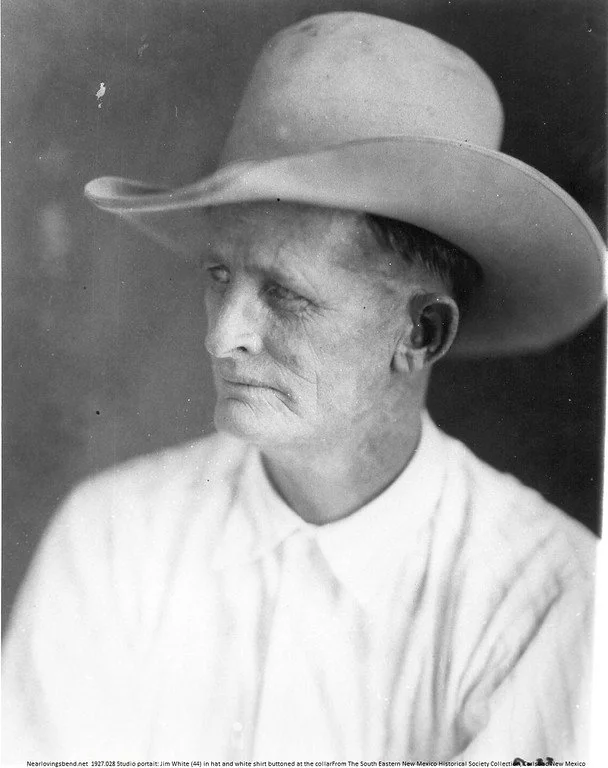
James Larkin White
Cowboy James Larkin “Jim” White was only 16 when, in 1898, he spotted smoke over the Guadalupe Mountains and rode out to investigate. He soon realized that the plume was not smoke, but a cloud of thousands of Mexican free-tailed bats streaming out from the mouth of a nearby cave.
Overcome with curiosity, White returned days later with a handmade ladder of wire and wood and descended into the deep cavern. Although not the first to discover the immense cave, White’s determined exploration and tireless promotion helped lead to its designation as Carlsbad Cave National Monument in 1923, and Carlsbad Caverns National Park in 1930. These designations brought national attention to the City of Carlsbad, establishing it as a significant tourist destination that diversified the local economy.
In the early years of his explorations, White worked as a mining foreman for the fertilizer company that extracted bat guano from the cave. Always eager to share his discovery, he used a guano bucket to lower curious visitors into the cave. When the caverns were officially designated a National Park, White became a ranger and guide for the federal government.
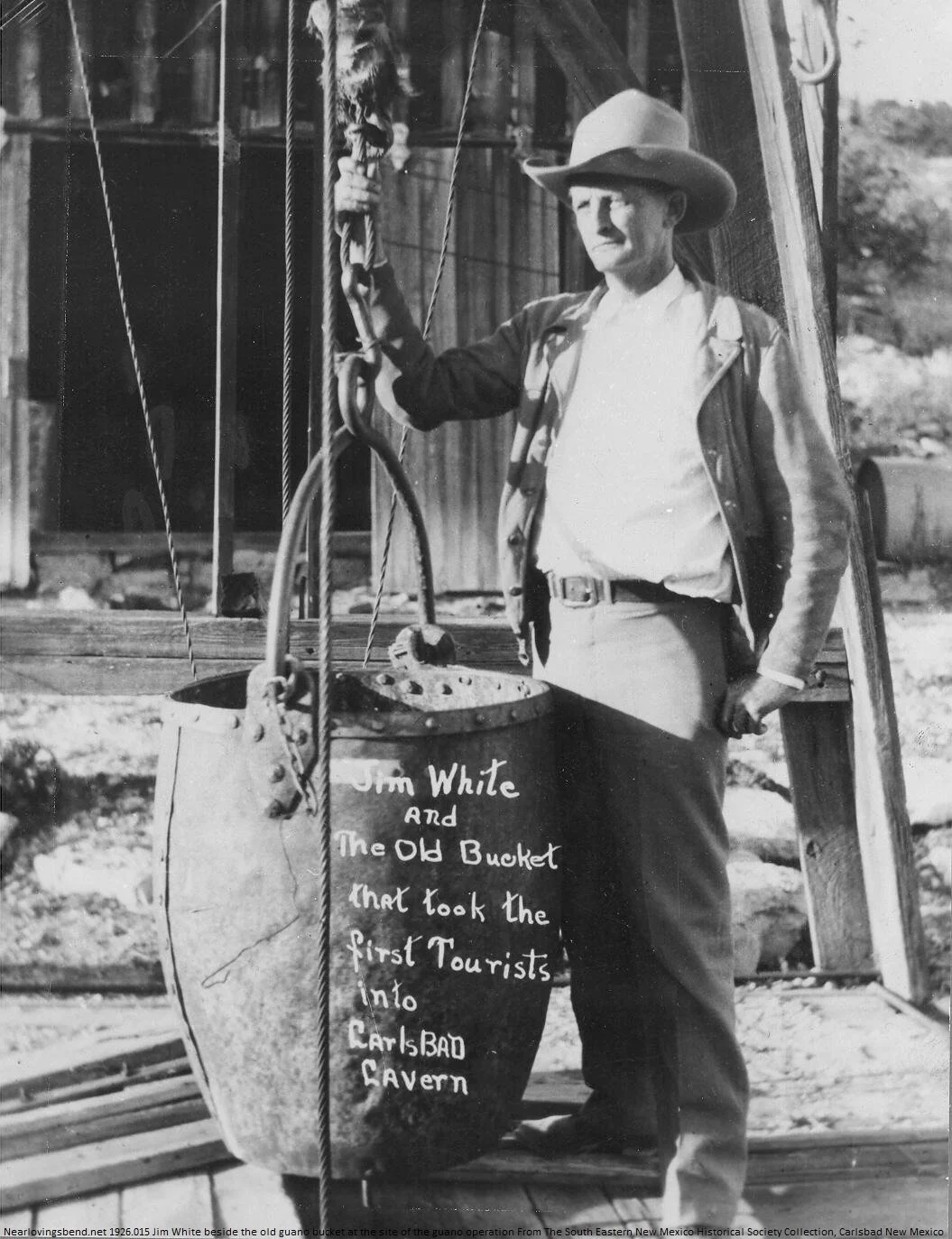
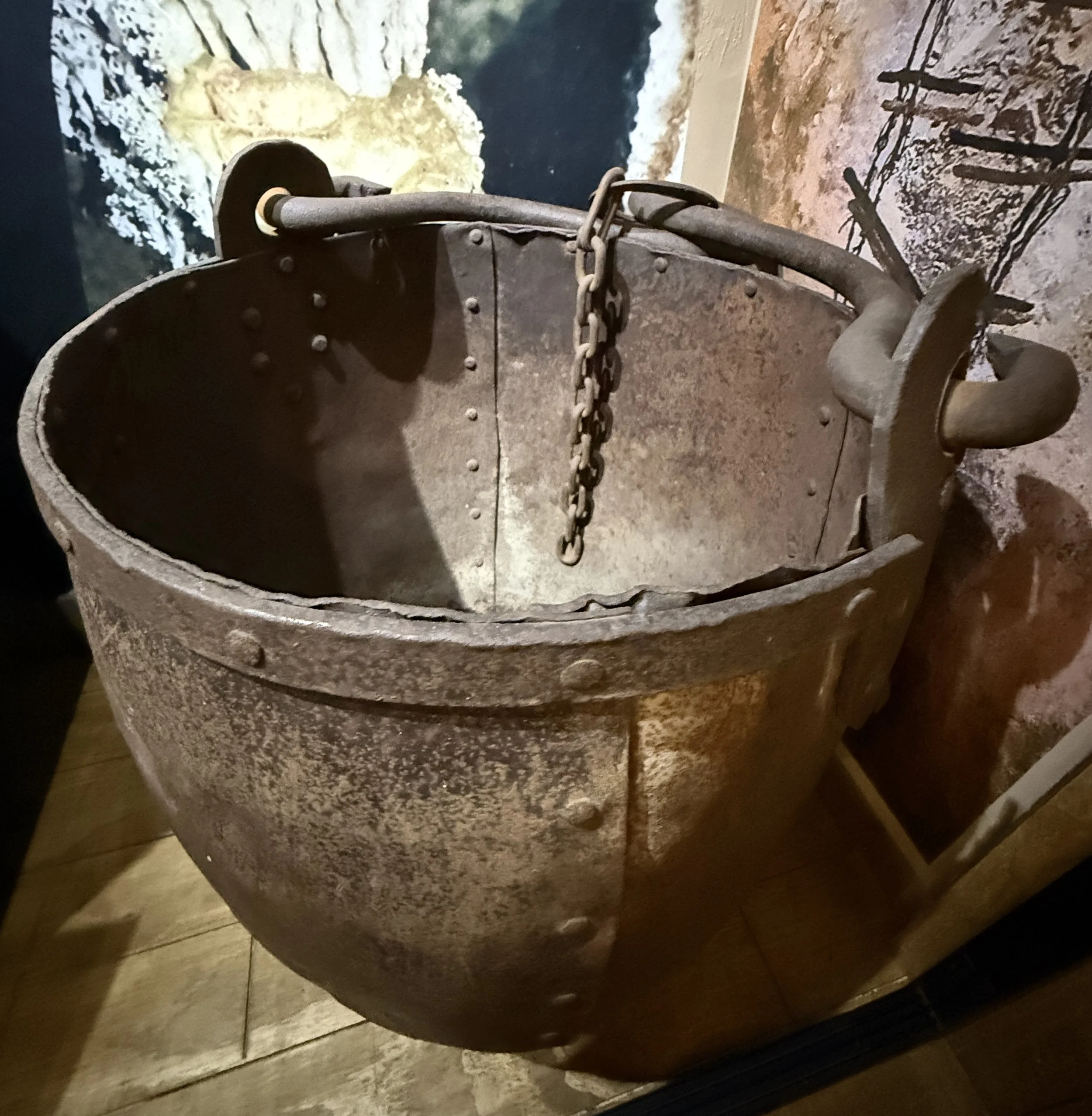
Guano buckets like the specimen on display at Carlsbad Museum were once the only way to bring guano out and lower guests in to Bat Cave (later Carlsbad Caverns) in its earliest days.
Top Photo Courtesy of SENM Historical Society
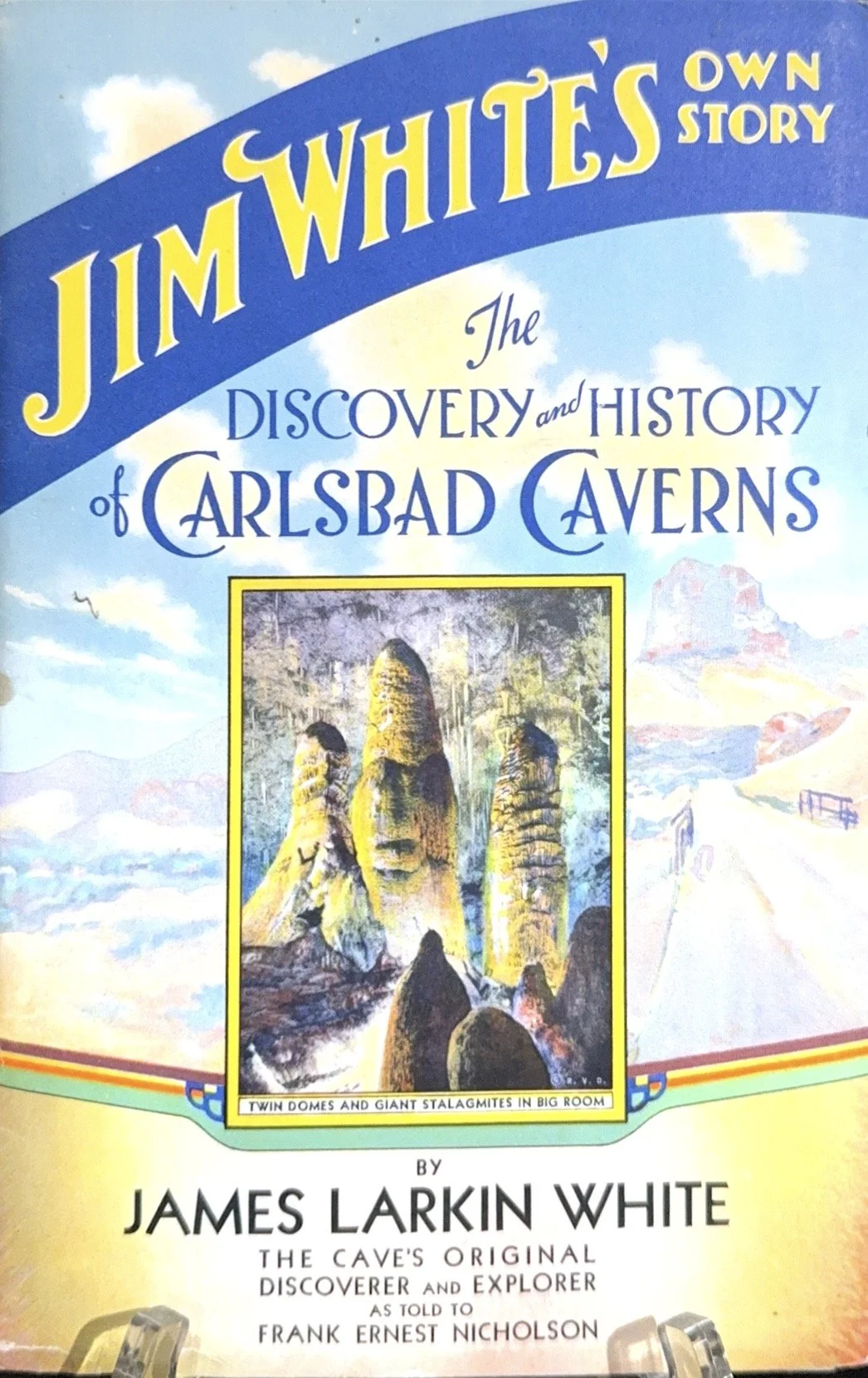
The Discovery and History of Carlsbad Caverns was first published in 1932 by Jim White with the help of a ghost writer, to tell the story of his early explorations and the development of Carlsbad Caverns. This book was sold for 75¢ and later $1.00 at the Carlsbad Caverns gift shop.
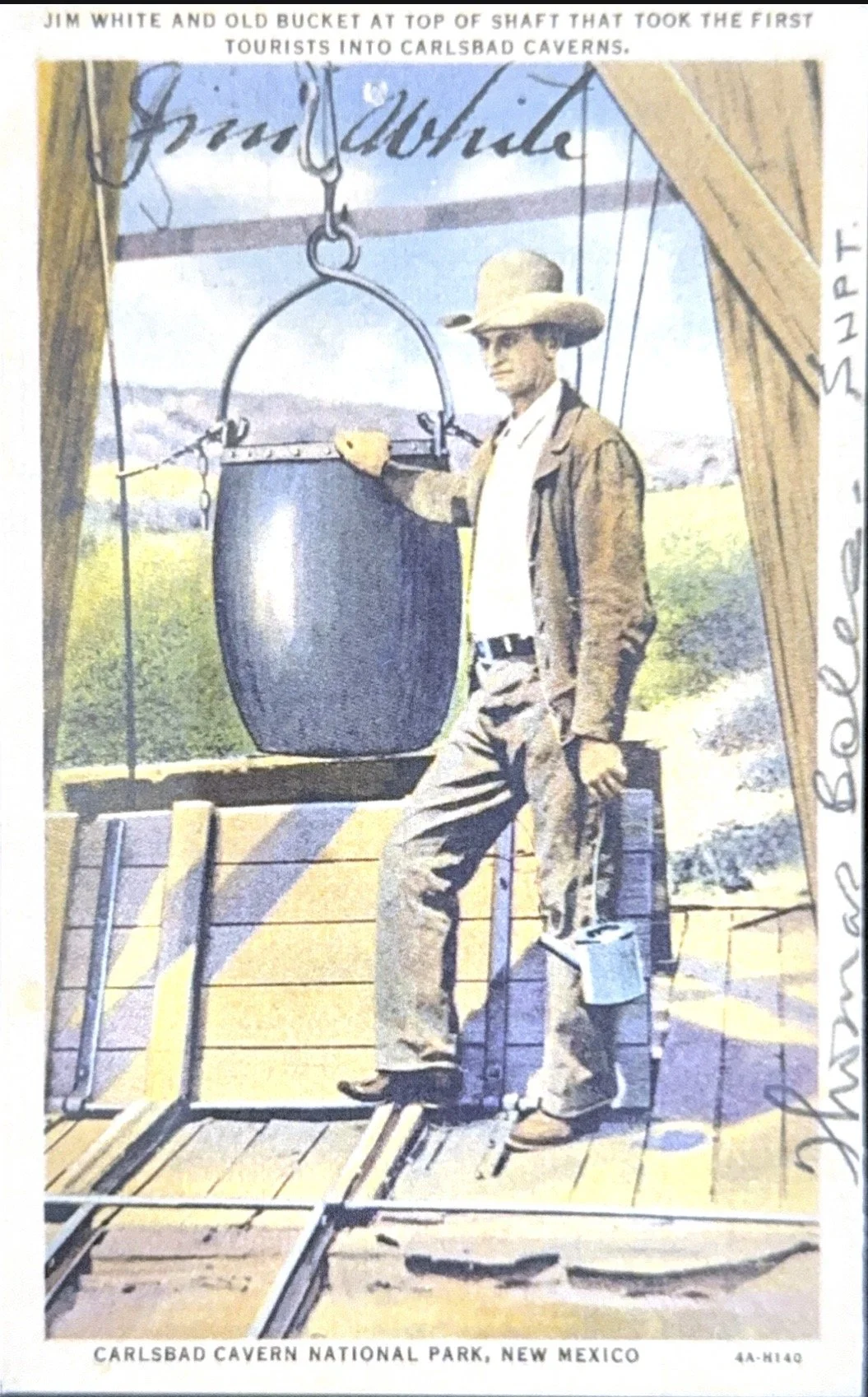
This linen postcard was sold as a souvenir at White’s City, New Mexico to promote Jim White’s book. This specimen from a local private collection features both White’s signature along with that of Thomas Boles, the first superintendent of Carlsbad Caverns.
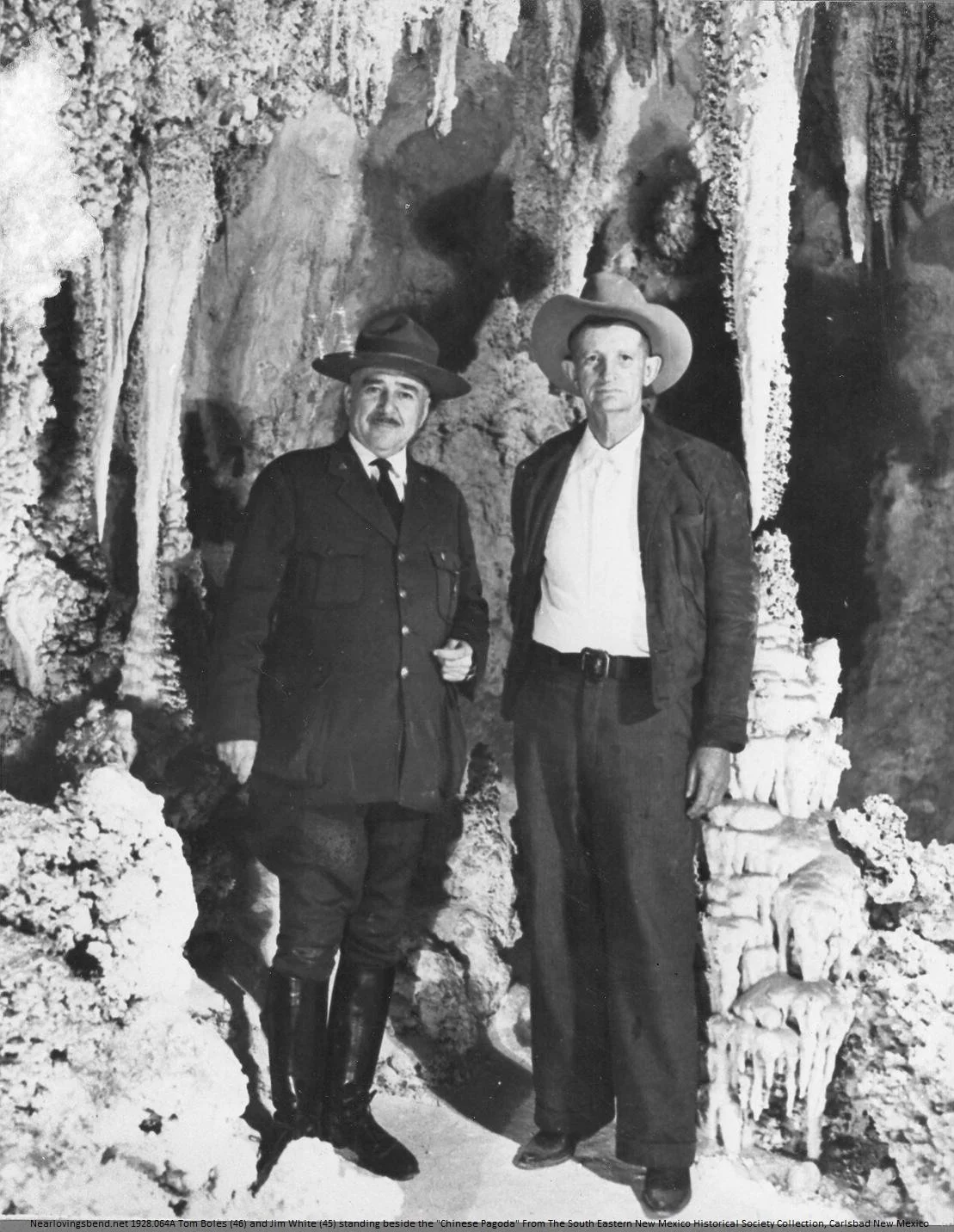
1928 Jim White and Park superintendent Tom Boles posing with the Chinese Pagoda in Carlsbad Caverns.
Photo Courtesy of SENM Historical Society