

Chuckwagons & COwboys:
The ARt of THeodore Van Soelen
Theodore
Van
Soelen (1890 - 1964)
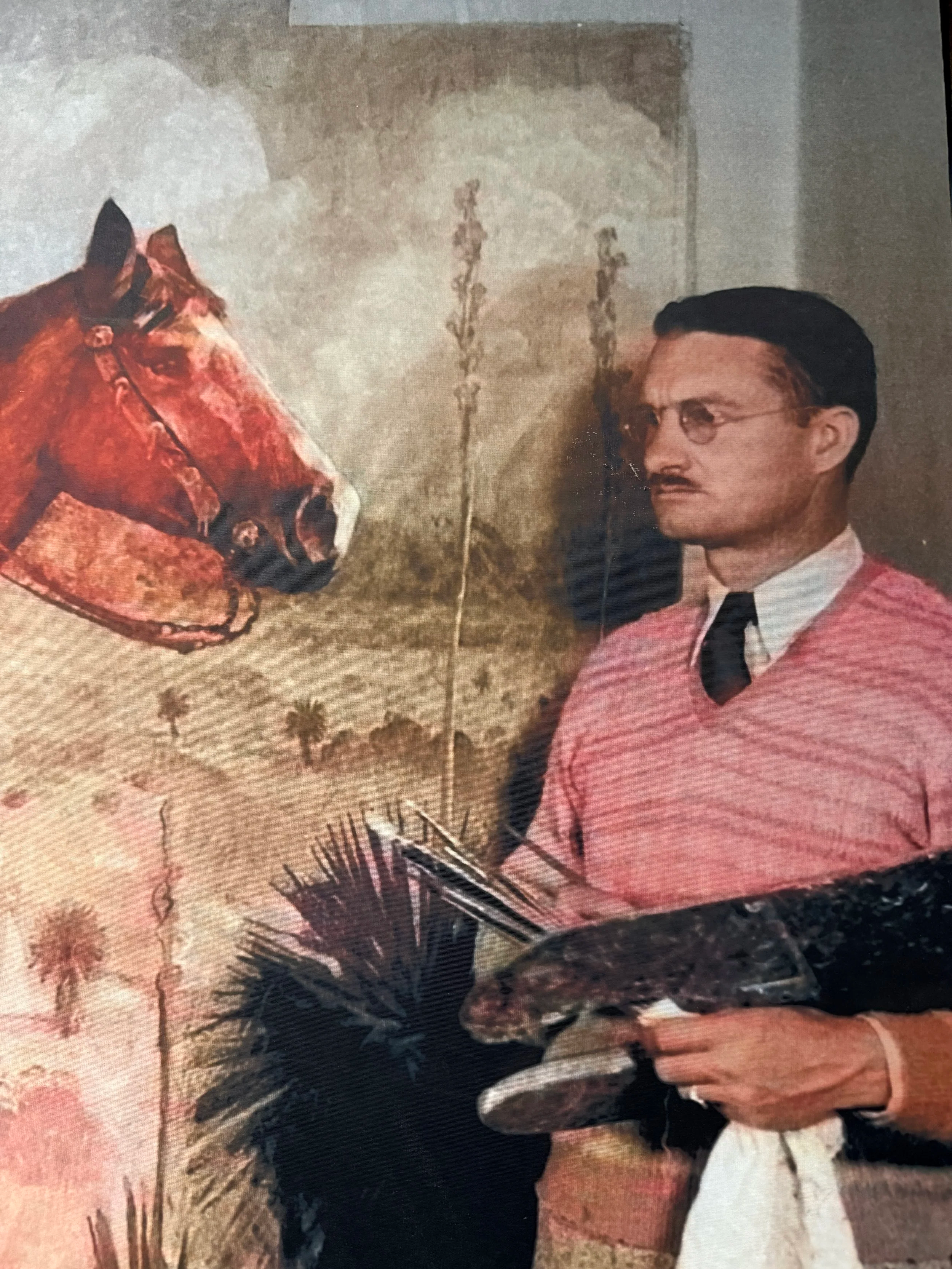
Theodore Van Soelen was born in St. Paul, Minnesota, in 1890. He began his artistic training at the St. Paul Institute of Arts and Sciences from 1908 to 1911 before continuing at the Pennsylvania Academy of Fine Arts. There, he was awarded the Cresson Traveling Scholarship, which enabled him to study in Europe in 1913 and 1914.
Upon Returning to the United States, Van Soelen moved to Albuquerque New Mexico in 1916 following a tuberculosis diagnosis. He worked as a commercial illustrator while selling his first paintings. To better understand the cattleman culture of the region, he live in various towns and ranches throughout New Mexico while also spending a year at the San Ysidro Indian Trading Post to deepen his knowledge of Native American culture. During this time, the Cincinnati Art Museum held a solo exhibition of his work, which afforded him national attention.
In 1933, Van Soelen married Virginia Carr and moved to Santa Fe, New Mexico. By 1936 the couple had become permanent residents of nearby Tesuque, New Mexico. During the 1930’s, Van Soelen had established a strong market for his western paintings in the eastern United States, leading him to open a second studio in Cornwall, Connecticut.
He was elected a National Academician and exhibited widely in the East, including shows at the National Academy, the Metropolitan Museum of Art in New York, and the Art Institute of Chicago. In New Mexico, he continued to create vivid landscapes of the American West.
In 1939, under the New Deal’s Federal Works Agency Section of the Fine Arts, Van Soelen painted a mural entitled Buffalo Range for the Portales, New Mexico, post office. He also completed murals for the Grant County Courthouse in Silver City, New Mexico, and for post offices in Waurika, Oklahoma, and Livingston, Texas.
In 1960, he was named an Honorary Fellow in Fine Arts by the School of American Research in Santa Fe. Van Soelen passed away in 1964.
Van Soelen’s art was recognized in both the eastern and western United States. He favored subjects that highlighted ranching life and often worked in an illustrator’s style. Over his lifetime, he became a noted landscape and portrait artist
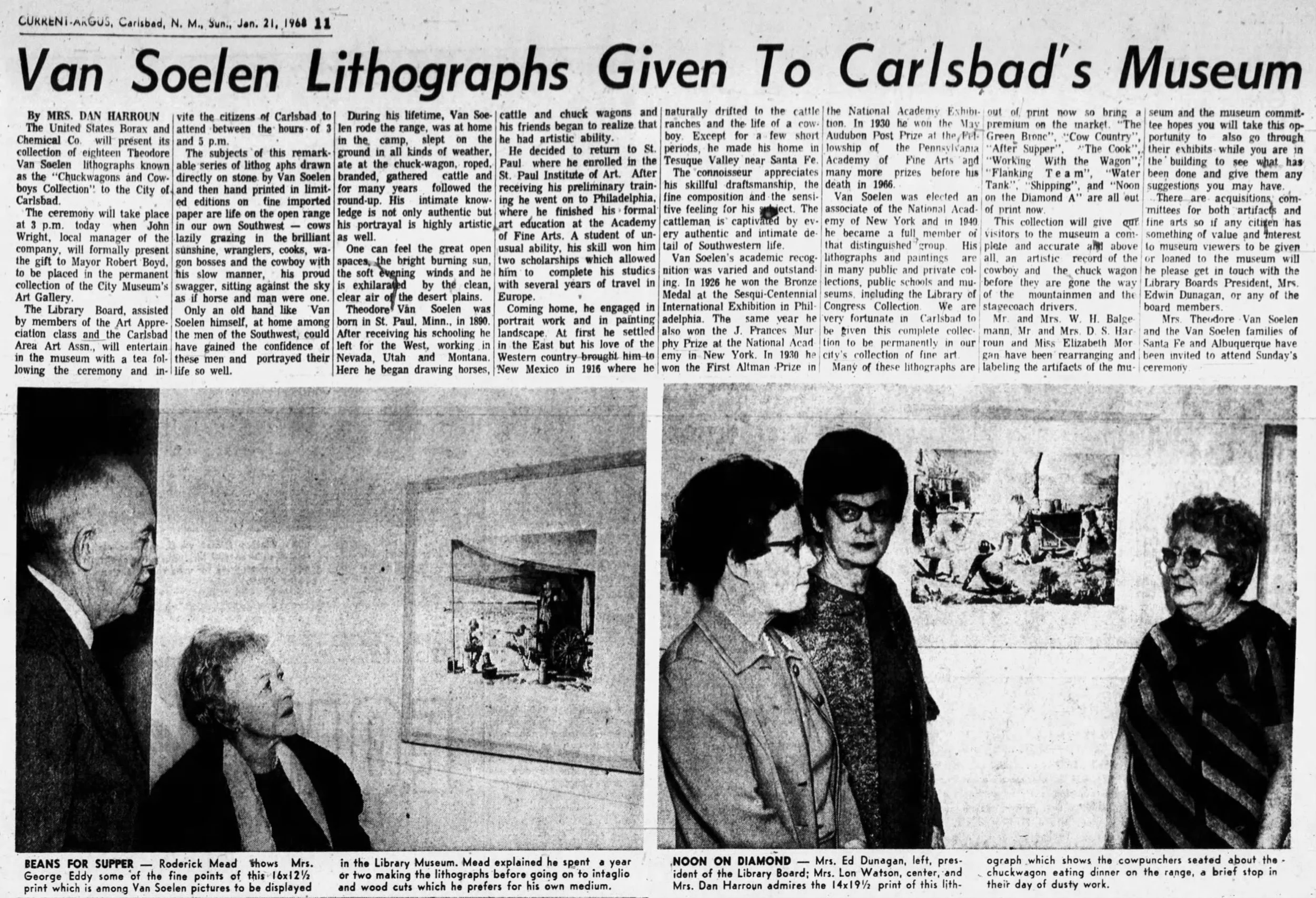
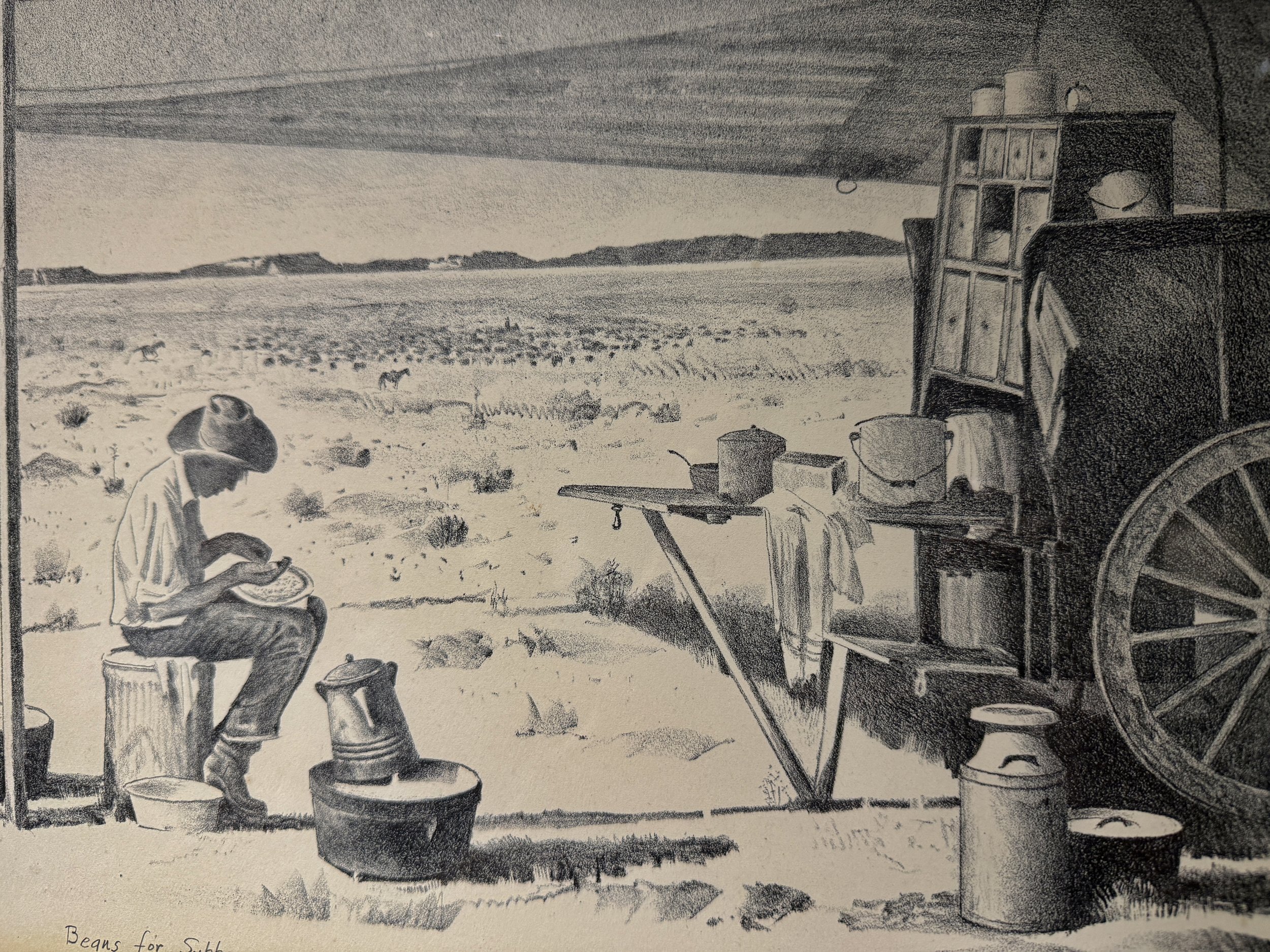
Chuckwagons and Cowboys: The Art of Theodore Van Soelen is a collection of 18 lithographs that were gifted to Carlsbad Museum by the United States Borax and Chemical Company in 1968. You’ll find this exhibition on display in the Roderick Mead Gallery, just next to the Museum’s very own specimen of the titular chuckwagon.
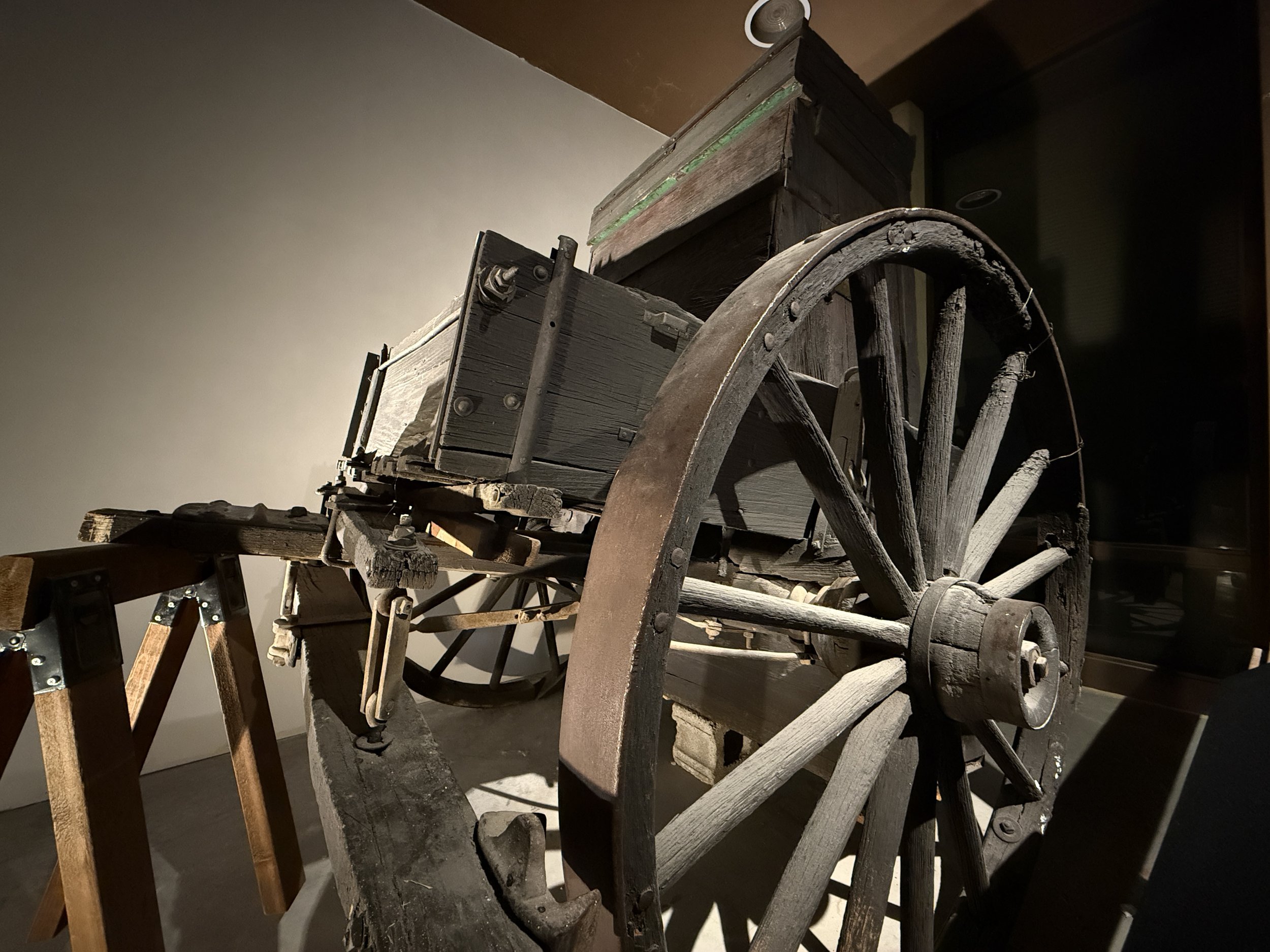
This chuckwagon originates from the San Simon ranch located near present-day Carlsbad, New Mexico. It represents the cowboy and ranching culture that inspired Van Soelen’s work, such as the 18 lithographs that make up Chuckwagons and Cowboys collection. Chuckwagons were the “mobile kitchens” for the cowboys and loggers of the American West and Canada who worked deep in the frontier.